


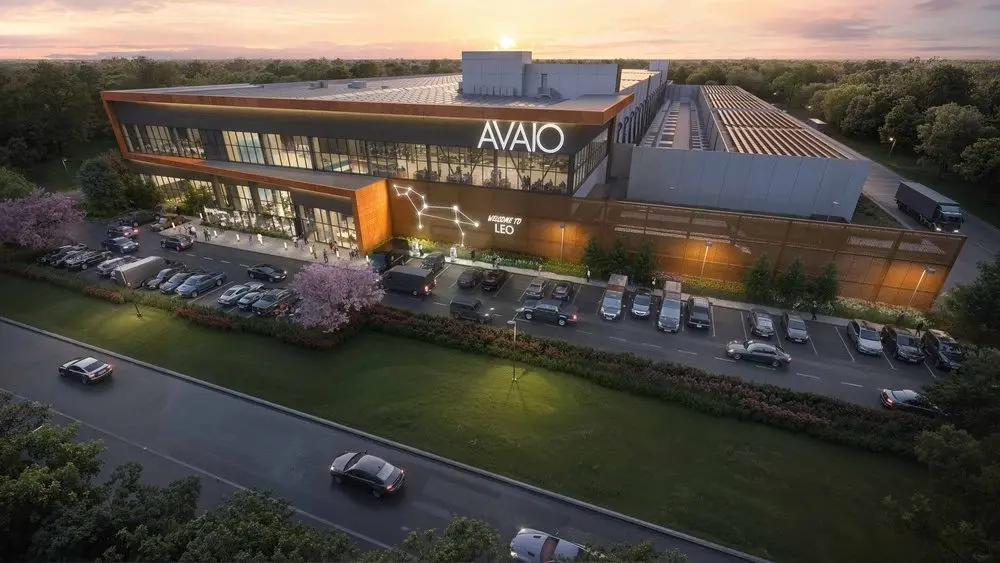
A computer rendering of the AVAIO data center campus in Pulaski County
A Connecticut-based data center developer plans to invest $6 billion to build a large-scale digital campus in Pulaski County, marking the largest economic development project in Arkansas history.
AVAIO Digital Partners announced Thursday it will construct AVAIO Digital Leo, a multibuilding data hub designed to support cloud computing and artificial intelligence operations. The project will phase in over several years and could ultimately exceed $21 billion in total public and private investment, company officials said.
The campus will begin construction in early 2026 and is expected to be energized by June 2027. AVAIO said it has contracted for 150 megawatts of power from Entergy Arkansas and may require up to 1 gigawatt as demand expands.
State leaders said the development underscores Arkansas’ efforts to accelerate technology and energy projects. According to the Arkansas Department of Commerce, the Little Rock campus was chosen for its many advantages:
- Robust, low-latency interconnection options with multiple long-haul and regional fiber routes connecting to major data center markets including Dallas, Atlanta and Memphis as well as emerging edge markets across the Southeast and Midwest
- Rapid delivery of grid power by Entergy, with a contracted 150 MWs energized in Q2 of 2027
- Substantial onsite natural gas infrastructure facilitating rapid deployment of energy-efficient on-site power
- At 760 acres, a size sufficient to support a large, multi-building campus with on-site power generation
Gov. Sarah Huckabee Sanders called the announcement proof that business-friendly policies are drawing large employers.
The project is expected to create more than 500 permanent jobs and thousands of construction openings. AVAIO cited the region’s workforce, fiber connectivity and available land among key factors in its selection.
The 760-acre campus will feature energy-efficient cooling, onsite power options and natural buffers to reduce impact on neighboring communities.
Google announced its own four-billion-dollar data center project in West Memphis in October, which is already under construction. Like Google, the AVAIO project plans to obtain power from Entergy. Three other data centers are also planned in Little Rock, Conway and Clarksville.
Data centers needed to support the growing use of AI products, such as ChatGPT, have drawn increased scrutiny for their heavy energy demands as power bills rise nationwide. According to reporting from the Arkansas Advocate, energy costs are up nearly 30% nationally since 2021. The announcements follow the passage of Act 373 of 2025, which supporters say streamlines permitting for new power generation, while critics argue it reduces oversight and shifts costs to customers.
Image via the Arkansas Department of Commerce
Have a news tip or event to promote? Email White River Now at news@whiterivernow.com. Be sure to like and follow us on Facebook and Twitter. And don’t forget to download the White River Now mobile app from the Google Play Store or the Apple App Store.
Get up-to-date local and regional news/weather from the First Community Bank Newsroom on Arkansas 103.3 KWOZ every weekday morning and afternoon. White River Now updates are also aired on weekday mornings on 93 KZLE, Outlaw 106.5, and Your FM 99.5. Catch CBS News around the top of every hour on 1340 KBTA.